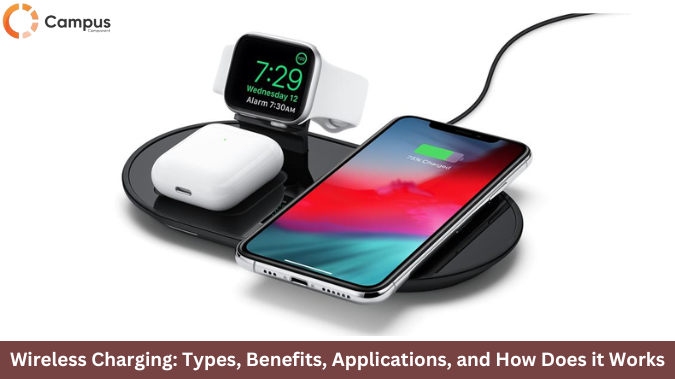
What is Wireless Charging and How Does It Work?
Wireless charging, also known as inductive charging, is a technology that allows devices to be powered without the need for physical cables. This method uses an electromagnetic field to transfer energy between a charging pad and a compatible device, such as a smartphone or smartwatch. The process involves two coils, one in the charging station and another in the device. When the charger is connected to a power source, it creates an alternating electromagnetic field, which is then received by the device's coil and converted back into electrical energy to charge the battery.
The charging process is not only convenient but also eliminates wear and tear on charging ports, making it a popular choice for modern devices. To use wireless charging, simply place your device on the pad, ensuring proper alignment with the charging coils. Many newer smartphones support this technology, and it's becoming increasingly common in public spaces such as cafes and airports. However, it's important to note that wireless charging may be less efficient compared to traditional wired charging, potentially leading to longer charge times.
Counter-Strike is a popular first-person shooter game that emphasizes teamwork and strategy. Players can choose between two teams, terrorists and counter-terrorists, and engage in various missions, such as bomb defusals or hostage rescues. For gamers seeking to enhance their experience while playing, consider checking out the Top 10 airpods charging stands for a seamless audio experience. With its competitive gameplay and a dedicated community, Counter-Strike has become a staple in the esports arena.
The Benefits of Wireless Charging: Convenience or Hype?
Wireless charging has rapidly gained popularity, and for good reason. The benefits of wireless charging are primarily centered around convenience. With this technology, users can simply place their devices on a charging pad without the hassle of plugging and unplugging cables. This reduces wear and tear on charging ports and eliminates the struggle of fumbling with cords in low-light situations. Wireless charging also promotes a more organized and clutter-free environment, allowing for a seamless integration of charging stations into home and office settings.
However, while many users appreciate the convenience of wireless charging, some critics argue that it may be more of a hype than a necessity. For instance, wireless chargers often deliver lower charging speeds compared to traditional wired chargers. Furthermore, for those in a hurry, the slight delay in charging time can be a significant drawback. Additionally, compatibility can be a concern, as not all devices support this method. Despite these drawbacks, the convenience offered by wireless charging continues to attract users, leading many to embrace it as a worthwhile investment in today’s fast-paced digital world.
Exploring the Future: How Wireless Charging is Evolving
The rapid advancement of technology has led to remarkable innovations, and one of the most promising developments is wireless charging. This technology, which enables the transfer of power without the need for physical connections, is evolving at an unprecedented pace. As various industries recognize its potential, we can expect to see widespread adoption in everyday devices such as smartphones, electric vehicles, and home appliances. With the integration of wireless charging in public spaces like cafes and airports, the future looks bright for a more convenient and efficient charging experience.
As we delve deeper into the evolution of wireless charging, several trends are emerging that could reshape the way we power our devices. For instance, inductive charging has become a mainstream method, yet innovations like resonant charging are gaining traction, allowing devices to charge at greater distances. Furthermore, researchers are exploring new materials and technologies, such as solar-powered chargers and ultrasonic charging, which promise to enhance efficiency and broaden the applications of wireless charging. As these advancements continue to unfold, we are likely to witness a significant impact on how we interact with technology in our daily lives.